Don't Buy the Cordless Hardwood Floors Until You Read This Full Analysis
Shopping in the Electronics category can get confusing when product names blur the line between flooring care, home gadgets, and cleaning technology. That is exactly what happens with the phrase Cordless Hardwood Floors. Most buyers using this term are not looking for actual floors. They are usually searching for a cordless electronic cleaning solution designed for hardwood floors, such as a cordless vacuum, stick cleaner, or hard-floor cleaning device that can handle wood surfaces safely and efficiently.
This distinction matters. Hardwood flooring is one of the most expensive and visually important features in a home, and the wrong cordless cleaning product can leave scratches, dull the finish, scatter debris instead of removing it, or simply fail to justify its price. Many buyers are drawn in by marketing promises around lightweight design, powerful suction, smart sensors, and all-in-one convenience, only to discover that real-world performance on hardwood is much more nuanced.
This analysis takes a closer editorial look at what shoppers should understand before buying any product marketed around cordless hardwood floor cleaning. It examines how these devices perform in actual homes, what features matter most, where they tend to disappoint, and which types of households benefit the most. For anyone considering a cordless cleaner specifically for hardwood surfaces, this full breakdown offers a more practical perspective than a spec sheet ever could.
What “Cordless Hardwood Floors” Usually Means to Buyers
Despite the awkward wording, the phrase typically signals interest in a battery-powered floor-cleaning device made for hardwood. In most cases, buyers are comparing one of the following:
- Cordless stick vacuums with soft rollers or hardwood-safe floor heads
- Cordless wet-dry cleaners that vacuum and mop sealed hardwood in one pass
- Cordless electric sweepers for quick daily debris pickup
- Cordless hard-floor polishers or scrubbers for maintenance cleaning
Among these, cordless stick vacuums remain the most common choice because they combine portability, ease of storage, and quick access. That said, not every cordless model is truly suited for hardwood. Some are tuned more for carpet agitation, with brush rolls that can be too aggressive or floor heads that push around larger debris like cereal, pet kibble, or grit.
Find top-rated Electronics products at great prices.
See Deals →The most effective hardwood-focused models tend to emphasize gentle contact, consistent pickup, edge cleaning, low profile maneuverability, and battery efficiency. Those qualities affect everyday usability more than flashy digital displays or app connectivity.
Detailed Analysis: Are Cordless Cleaners Actually Good for Hardwood Floors?
The short answer is that they can be excellent, but only when the product is designed with hard surfaces in mind. Hardwood floors present a very different challenge than carpets. On carpet, the goal is often to pull deeply embedded debris from fibers. On hardwood, the goal is to pick up visible dust, hair, crumbs, and fine grit without damaging the finish or blowing debris outward.
Where Cordless Models Shine
For daily and light-to-moderate cleaning, cordless devices are often better suited to hardwood than traditional upright vacuums. Their biggest strength is convenience. Because they do not need to be plugged in, they are far more likely to be used for quick touch-ups in kitchens, entryways, dining areas, and under furniture. This matters because hardwood usually looks best when cleaned frequently rather than heavily cleaned once debris has built up.
In real-world homes, this convenience becomes especially valuable in several situations:
- Pet households where fur and tracked litter appear daily
- Families with children who leave crumbs under tables and around snack areas
- Open-plan homes where hard flooring runs through multiple rooms
- Condos and apartments where compact storage and low weight matter
- Older homeowners who want something easier to carry than a full-size vacuum
Good cordless hardwood cleaners are also quieter and less cumbersome than older plug-in machines. A lightweight unit with a responsive floor head can make spot cleaning feel almost effortless, which is often the single biggest reason owners end up satisfied with their purchase.
Looking for the best Electronics deals on Amazon?
Shop Amazon →Where Cordless Models Fall Short
The drawbacks are just as important. Battery runtime is still a practical limit, particularly in larger homes. Manufacturer runtime claims are often based on lower suction settings and ideal conditions. Once a buyer switches to a stronger mode, uses a motorized floor head, or cleans a full main level in one session, actual runtime can drop significantly.
Dust-bin size is another common weakness. Hardwood floors may not trap dirt like carpet does, but they do reveal every particle. Frequent cleaning can fill a small bin surprisingly quickly, especially in homes with pets or a lot of foot traffic. Buyers expecting a cordless cleaner to replace a full-size deep-cleaning vacuum in every scenario may find this frustrating.
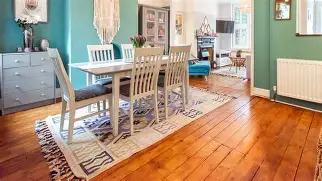
There is also the issue of debris size and floor-head behavior. Some cordless units are excellent with fine dust but mediocre with larger crumbs. Others create a “snowplow effect,” pushing debris ahead of the vacuum head instead of collecting it cleanly in one pass. This is a common complaint on hardwood and one reason floor-head design matters more than raw suction numbers.
Key Features That Matter More Than Marketing Hype
1. Soft Roller or Hardwood-Safe Brush Design
A hardwood-friendly cleaner should avoid unnecessary aggression. Soft rollers, felted components, or